

The Paladin was announced at the 2025 Game Awards and was made available to everyone for the start of Season 11 if they pre-order the Lord of Hatred expansion.
Overview
The Paladin returns in Diablo IV: Lord of Hatred as a familiar but reworked holy warrior. Players coming from Diablo II or Diablo III will recognise the core identity immediately: heavy armour, sword and shield, Auras, and some of the most iconic holy skills the series has ever had. What has changed is how those pieces are structured and how far the class leans into divine power rather than pure martial strength.
What Will Feel Familiar
Anyone who played a Paladin in Diablo II or a Crusader in Diablo III will feel on steady ground here.
The class once again revolves around shield-based combat, controlled positioning, and steady pressure rather than burst mobility. Auras are back, serving as a foundational part of the kit rather than a secondary flavour mechanic. Blessed Hammer and Blessed Shield return as centrepiece skills, not nods or callbacks, and Zeal once again defines fast, committed melee combat.
From Diablo III’s Crusader, several ideas carry forward directly. Condemn and Heaven's Fury are present, and the overall pacing of combat still favours deliberate swings, heavy impacts, and strong defensive uptime. The Paladin does not rely on evasive movement in the way classes like Rogue do.
Where It Breaks from the Crusader
The biggest shift is philosophical. Where the Crusader leaned into physical presence and martial resolve, the Diablo IV Paladin leans much harder into faith and divine power.
Holy damage is formally back as a damage type, which immediately sets the Paladin apart from other classes. Many skills are less about raw weapon strikes and more about channeling or conjuring holy force through weapons, shields, and the battlefield itself.
Visually and mechanically, the Paladin is presented as a conduit for the Light rather than simply a knight blessed by it. This shows up across skills, animations, and sound design, all of which emphasise weight, impact, and divine authority.
Class Fantasy and Themes
Paladins fight as disciplined champions of the Light. Their armor, weapons, and conjured tools act as conduits for celestial power. The class design emphasises weight, impact, faith driven strength, and the ability to project holy force across the battlefield.
Three design pillars shape the class:
- Indomitable Guardian
- Divine Armory
- Holy Conduit
Core Mechanics
- Holy damage returns as a primary Paladin element.
- Combat animations highlight heavy armor and radiant force.
- Conjured holy weapons include hammers and lances.
- Arbiter Form grants flight assisted movement and heavenly attacks.
- The Oath System defines your class identity.
Skill Types
The skills so far named are ask follows:
Offensive Skills
- Zeal
- Blessed Hammer
- Blessed Shield
- Condemn
- Heaven's Fury
- Spear of the Heavens
- Consecration
Defensive Skills
- Shield Bash
Mobility and Utility
- Arbiter Form wing assisted movement and diving attacks
Ultimate Abilities
- Fortress – defensive ultimate that provides a short window of extreme durability.
- Zenith – holy blade ultimate that delivers a powerful melee strike.
Legacy Skills and Class Identity
The Paladin’s legacy in Diablo II provides clear historical context for several returning names in Diablo IV: Lord of Hatred. The following summaries describe how these abilities functioned in Diablo II and why they became central to the class fantasy. These descriptions do not reflect any confirmed behaviour in Diablo IV but it's unlikely `they would be a million miles away.
Combat Techniques (Diablo II)
- Zeal - A rapid chain attack that struck multiple times in quick succession, establishing the Paladin as an aggressive frontline fighter.
- Smite - A shield driven blow that always hit its target, reinforcing the Paladin’s disciplined, shield based identity.
- Vengeance - A single powerful strike that added elemental damage based on weapon strength, expressing the blend of martial skill and holy power.
- Charge - A fast, forceful rush used to close distance instantly and deliver high impact momentum driven damage.
Holy Conjurations (Diablo II)
- Blessed Hammer - A spiraling conjured hammer that dealt magic damage and defined one of the most recognised Paladin archetypes.
- Holy Bolt - A projectile that healed allies and inflicted damage on undead, reflecting the Paladin’s dual priestly and punitive roles.
- Fist of the Heavens - A lightning strike that released Holy Bolts at nearby undead, symbolising celestial judgment.
Auras and Sacred Empowerment (Diablo II)
- Might, Concentration, and Fanaticism - Auras that enhanced physical power, attack speed, and reliability, establishing the Paladin as a battlefield leader.
- Conviction - An aura that lowered enemy resistances and defense, emphasising the Paladin’s role in enabling allies and weakening foes.
- Holy Fire, Holy Freeze, Holy Shock - Elemental auras that added pulsing elemental damage and visually expressed radiant empowerment.
- Defensive auras such as Prayer, Resist auras, Cleansing, Vigor, Meditation, Redemption, and Salvation - Effects that provided healing, resistance, stamina, recovery, and purification, reinforcing the Paladin’s identity as a guardian.
Influence on Modern Class Identity
These abilities shaped the long-standing themes of disciplined melee combat, holy conjuration, and aura driven battlefield presence. Blizzard referenced skills such as Zeal, Blessed Hammer, Blessed Shield, Condemn, and Consecration during the Diablo IV reveal because they reflect the established legacy of the Paladin archetype, even though their Diablo IV functionality has not yet been detailed.
Specialisation: Oath System
The defining new mechanic for the Paladin is the Oath System.
Instead of a passive class mechanic, Paladins swear one of four Oaths. Each Oath pushes the class toward a distinct role and rewards commitment to that playstyle rather than encouraging generalist builds.
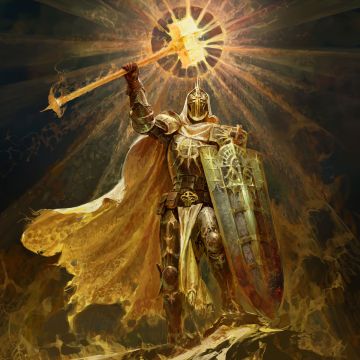
Judicator
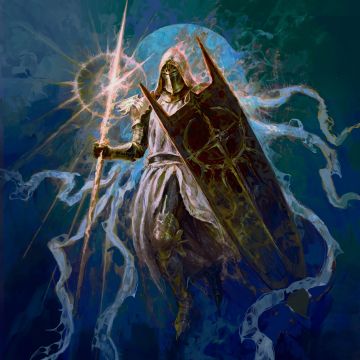
Arbiter
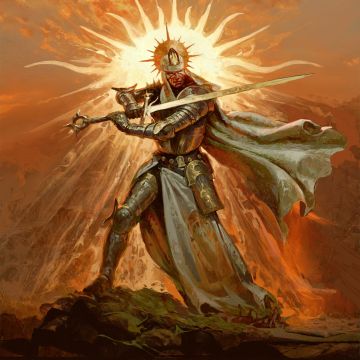
Zealot
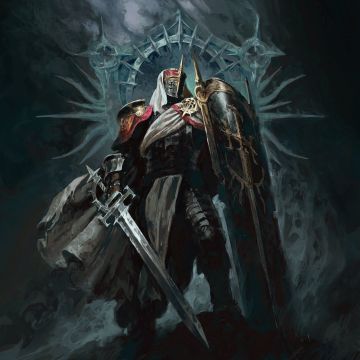
Juggernaut


Juggernaut
A defensive oath focused on shield and armor. Juggernaut turns defense into offense.
- Core skill: Shield Bash
- Ultimate: Fortress
Zealot
A fast paced melee oath based on Zeal. The Zealot fights with sustained pressure and builds toward a powerful finishing attack.
- Core skill: Zeal
- Ultimate: Zenith
Judicator
A judgment oriented oath with an emphasis on holy conjurations.
- Key abilities: Blessed Shield, Blessed Hammer, Consecration, Heaven's Fury
Disciple
A celestial oath that unlocks the Arbiter Form. Blizzard developers described the Arbiter Form as an angelic transformation in which the Paladin temporarily becomes an angelic figure. The form grants wings, aerial movement, diving attacks, and access to radiant lances such as Spear of the Heavens.
- Grants access to Arbiter Form with angelic wings
- Key ability: Spear of the Heavens
Switching Oaths changes not just bonuses, but how the Paladin approaches combat and buildcraft. This system replaces older ideas like Diablo II’s broad Aura stacking with something more structured and explicit.
Arbiter Form and What Is New
The most dramatic addition is Arbiter Form.
Under the Disciple Oath, the Paladin can temporarily transform into an angelic form. This is not a cosmetic effect. It introduces flight, diving attacks, and a new conjured lance weapon that does not resemble anything the Paladin has used before.
This form draws clear inspiration from angelic figures in Diablo’s lore, but it functions as a short-term power state rather than a permanent shift. It is also the clearest signal that Diablo IV’s Paladin is willing to push beyond nostalgia rather than simply recreate Diablo II.
Class Strengths
- Strong defensive identity and shield based toolkit.
- Wide mix of melee, conjured, and transformation skills.
- Clear thematic variety through Oath specialisation.
- Iconic legacy themed abilities preserved.
Class Weaknesses
- Oath specialisation may reduce hybrid flexibility.
- Resource system details have not been provided in official material.
Lore
The Paladin entered the Diablo series in Diablo II as a holy warrior of the Zakarum faith. Over more than twenty five years of franchise history, Paladins have represented devotion, discipline, and righteous strength.
In Lord of Hatred, the class returns as a beacon of holy power during a new rise in demonic influence. The Arbiter Form uses angelic visual themes described directly by Blizzard developers, who cited Tyrael as a source of inspiration for its silhouette and presentation.
Legacy elements such as Auras, Blessed Hammer, Blessed Shield, and Condemn were referenced by Blizzard developers when discussing Paladin expectations and returning themes. Individual Aura skills for Diablo IV have not been detailed in the provided material but were highlighted as part of the class fantasy.
There is a wealth of familiar traits to satisfy those who played the Paladin previously, but the Oath System and Arbiter Form introduce mechanics that give this version its own identity.
| Barbarian | Druid | Necromancer | Rogue | Sorcerer | Spiritborn |
|---|---|---|---|---|---|