
mNo edit summary |
mNo edit summary |
||
| Line 1: | Line 1: | ||
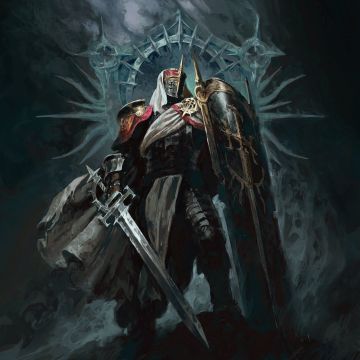
[[File:Paladin Art.jpg|alt=Paladin|thumb|Paladin]] | [[File:Paladin Art.jpg|alt=Paladin|thumb|Paladin]] | ||
== Paladin Overview == | |||
The Paladin is a heavily armoured holy warrior in Diablo IV, built around shields, faith-fuelled abilities, and sustained close-range combat. Unlike faster, more evasive melee classes, the Paladin is designed to hold position, absorb pressure, and deal consistent damage through a mix of physical strikes and holy power. | |||
The Paladin | |||
At the centre of the class is the '''Oath system''', a defining mechanic that reinforces distinct combat doctrines and shapes how Paladin skills function together. | |||
== How the Paladin Plays == | |||
Paladin gameplay emphasises commitment and durability rather than constant movement. | |||
Most builds operate at close range, using shields, armour, and damage mitigation to stay engaged while applying steady pressure. The class is designed to take hits and continue fighting, rather than relying on avoidance or frequent disengagement. | |||
Paladins combine direct melee attacks with conjured holy abilities. Combat alternates naturally between weapon-based strikes and abilities that channel divine power through shields, weapons, and the environment. | |||
== | == Core Paladin Systems == | ||
Several interconnected systems define how the Paladin functions in practice. | |||
; Faith | |||
The Paladin’s primary resource. It is generated through basic actions and select utility skills, then spent on heavier attacks and abilities. Managing Faith determines how long pressure can be maintained before pacing becomes necessary. | |||
; Resolve | |||
Provides sustained damage mitigation. Rather than avoiding damage, Paladins reduce incoming damage over time, allowing them to remain effective during prolonged engagements. | |||
; Auras | |||
A core part of the Paladin’s toolkit. While slotted, they provide persistent passive effects that influence nearby allies and enemies, with optional active components that can be triggered for short-term effects. | |||
Blocking is integral to the class. Shields are not merely defensive tools, but interact directly with several skills and effects, making shield use an active part of many builds. | |||
Paladins are most commonly played with a one-handed weapon and shield, though two-handed options exist for builds that trade defensive depth for increased damage. | |||
== The Oath System == | |||
The Paladin’s defining choice is the '''Oath''' they swear. | |||
Each Oath reinforces a specific combat doctrine and rewards commitment to that playstyle. Oath choice strongly influences which mechanics a build revolves around and how skills interact. | |||
<gallery> | <gallery> | ||
File:Judicar.jpg|Judicator | File:Judicar.jpg|Judicator | ||
| Line 78: | Line 46: | ||
File:Juggernaut.jpg|Juggernaut | File:Juggernaut.jpg|Juggernaut | ||
</gallery> | </gallery> | ||
=== Zealot === | |||
A fast-paced melee doctrine focused on sustained pressure and repeated strikes. Skills such as '''Zeal''' exemplify constant, committed combat. | |||
: <span style="color:#2e7d32; font-weight:700; font-size:110%;">✔</span> ''Suited to players who enjoy high attack frequency and continuous melee engagement.'' | |||
=== Juggernaut === | === Juggernaut === | ||
A defensive | A defensive doctrine that converts durability into power. Juggernaut builds revolve around '''Resolve''', shield use, and retaliation effects. | ||
: <span style="color:#2e7d32; font-weight:700; font-size:110%;">✔</span> ''Suited to players who prefer survivability, control, and deliberate pacing.'' | |||
=== Judicator === | === Judicator === | ||
A | A doctrine built around applying and detonating '''Judgment'''. Skills such as '''Blessed Shield''' and '''Spear of the Heavens''' are commonly used to trigger these effects. | ||
: <span style="color:#2e7d32; font-weight:700; font-size:110%;">✔</span> ''Suited to players who prefer structured combat and planned damage spikes.'' | |||
=== Disciple === | === Disciple === | ||
A celestial | A celestial doctrine centred on '''Arbiter form''', an angelic transformation that enhances mobility and damage. Disciple gameplay rewards chaining cooldown-based abilities to maintain empowered states. | ||
: <span style="color:#2e7d32; font-weight:700; font-size:110%;">✔</span> ''Suited to players who enjoy transformation mechanics and ability-driven play.'' | |||
Full mechanical details for each Oath are covered on the Oath System page. | |||
= | <div class="linkbox">[[Paladin Skill Tree|Oath System Guide]] </div> | ||
== Strengths and Trade-offs == | |||
; Strengths | |||
* Strong defensive identity and | * Strong defensive identity built around armour, shields, and mitigation | ||
* | * Clear mechanical focus and class cohesion | ||
* Distinct playstyles defined through Oath choice | |||
* Mix of melee, conjured, and transformation-based abilities | |||
; Trade-offs | |||
* Oath specialisation | * Primarily close-range focused | ||
* Many builds rely on setup and commitment | |||
* Cooldown management plays a significant role | |||
* Oath specialisation can limit hybrid flexibility | |||
== Where to Go Next == | |||
Legacy | * [[Paladin Skill Tree]] – complete list of Paladin skills | ||
* [[Paladin Oath System]] – detailed mechanics and interactions | |||
* [[Arbiter Form]] – how Arbiter form works and how it changes gameplay | |||
* [[Paladin Legacy and Inspiration]] – historical influences and class lineage | |||
[[Category:Classes]] | [[Category:Classes]] | ||
Revision as of 18:35, 26 December 2025

Paladin Overview
The Paladin is a heavily armoured holy warrior in Diablo IV, built around shields, faith-fuelled abilities, and sustained close-range combat. Unlike faster, more evasive melee classes, the Paladin is designed to hold position, absorb pressure, and deal consistent damage through a mix of physical strikes and holy power.
At the centre of the class is the Oath system, a defining mechanic that reinforces distinct combat doctrines and shapes how Paladin skills function together.
How the Paladin Plays
Paladin gameplay emphasises commitment and durability rather than constant movement.
Most builds operate at close range, using shields, armour, and damage mitigation to stay engaged while applying steady pressure. The class is designed to take hits and continue fighting, rather than relying on avoidance or frequent disengagement.
Paladins combine direct melee attacks with conjured holy abilities. Combat alternates naturally between weapon-based strikes and abilities that channel divine power through shields, weapons, and the environment.
Core Paladin Systems
Several interconnected systems define how the Paladin functions in practice.
- Faith
The Paladin’s primary resource. It is generated through basic actions and select utility skills, then spent on heavier attacks and abilities. Managing Faith determines how long pressure can be maintained before pacing becomes necessary.
- Resolve
Provides sustained damage mitigation. Rather than avoiding damage, Paladins reduce incoming damage over time, allowing them to remain effective during prolonged engagements.
- Auras
A core part of the Paladin’s toolkit. While slotted, they provide persistent passive effects that influence nearby allies and enemies, with optional active components that can be triggered for short-term effects.
Blocking is integral to the class. Shields are not merely defensive tools, but interact directly with several skills and effects, making shield use an active part of many builds.
Paladins are most commonly played with a one-handed weapon and shield, though two-handed options exist for builds that trade defensive depth for increased damage.
The Oath System
The Paladin’s defining choice is the Oath they swear.
Each Oath reinforces a specific combat doctrine and rewards commitment to that playstyle. Oath choice strongly influences which mechanics a build revolves around and how skills interact.

Judicator

Arbiter

Zealot
Juggernaut


Zealot
A fast-paced melee doctrine focused on sustained pressure and repeated strikes. Skills such as Zeal exemplify constant, committed combat.
- ✔ Suited to players who enjoy high attack frequency and continuous melee engagement.
Juggernaut
A defensive doctrine that converts durability into power. Juggernaut builds revolve around Resolve, shield use, and retaliation effects.
- ✔ Suited to players who prefer survivability, control, and deliberate pacing.
Judicator
A doctrine built around applying and detonating Judgment. Skills such as Blessed Shield and Spear of the Heavens are commonly used to trigger these effects.
- ✔ Suited to players who prefer structured combat and planned damage spikes.
Disciple
A celestial doctrine centred on Arbiter form, an angelic transformation that enhances mobility and damage. Disciple gameplay rewards chaining cooldown-based abilities to maintain empowered states.
- ✔ Suited to players who enjoy transformation mechanics and ability-driven play.
Full mechanical details for each Oath are covered on the Oath System page.
Strengths and Trade-offs
- Strengths
- Strong defensive identity built around armour, shields, and mitigation
- Clear mechanical focus and class cohesion
- Distinct playstyles defined through Oath choice
- Mix of melee, conjured, and transformation-based abilities
- Trade-offs
- Primarily close-range focused
- Many builds rely on setup and commitment
- Cooldown management plays a significant role
- Oath specialisation can limit hybrid flexibility
Where to Go Next
- Paladin Skill Tree – complete list of Paladin skills
- Paladin Oath System – detailed mechanics and interactions
- Arbiter Form – how Arbiter form works and how it changes gameplay
- Paladin Legacy and Inspiration – historical influences and class lineage
| Barbarian | Druid | Necromancer | Rogue | Sorcerer | Spiritborn |
|---|---|---|---|---|---|